 +(91) 9867215033
 info@ujjwalengineers.com
 Maharashtra, Gujarat, India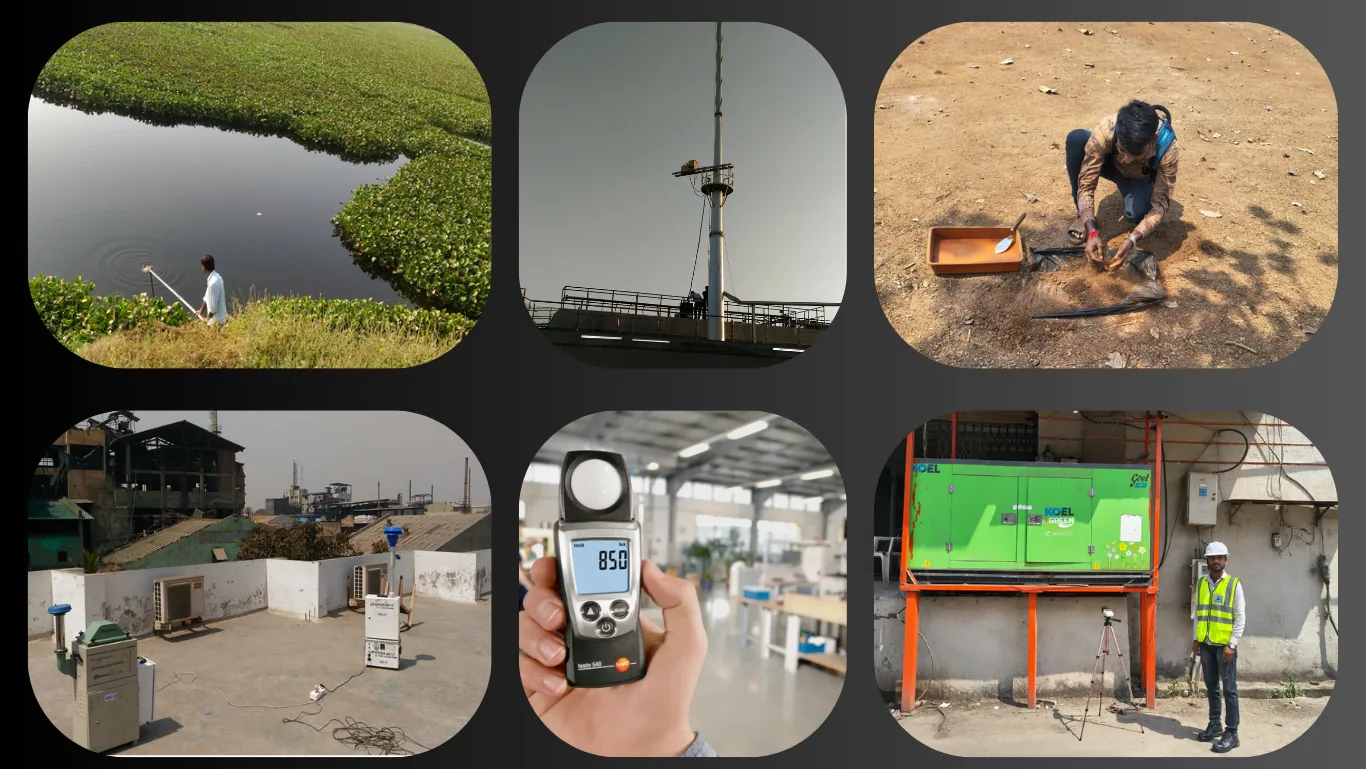
Source emission testing, done properly
Stack monitoring measures what actually leaves your chimney, at the point it leaves. It is a consent condition for most industrial units, and the results feed straight into your Form-V return and every inspection.
Parameters we test
- Particulate matter - isokinetic sampling
- Sulphur dioxide (SO2)
- Oxides of nitrogen (NOx)
- Carbon monoxide (CO) and carbon dioxide
- Hydrogen chloride, chlorine, ammonia where applicable
- Volatile organic compounds - relevant for solvent-handling units
- Stack gas velocity, temperature and flow rate
Why sampling conditions matter
A stack result taken while the plant runs at 40% load says very little about what happens at full load. Monitoring should be carried out under representative operating conditions, and the report should state what those conditions were. A report that omits load and operating status is difficult to defend when it is questioned.
Ports and platforms
Accurate isokinetic sampling needs properly located ports with adequate straight-length upstream and downstream, and a safe working platform. Where these are missing or badly placed, we say so rather than producing a number that cannot be relied on.
What your stack monitoring report includes
- Stack identification, fuel and process operating status during sampling
- Sampling location, port details and stack dimensions
- Measured concentration, flow and applicable reporting units
- Method references, instrument details and quality-control records
- Clear comparison with the applicable consent or regulatory limit supplied for the source
The rest of the monitoring programme
Stack testing sits alongside ambient air, water, noise and soil work in our NABL-accredited laboratory. Running them together keeps the calendar consistent - and monitoring gaps are the one audit finding that cannot be fixed retrospectively.





 As per MOEF & CC’s (Govt. of India) Office Memorandum F.
No. 22-34/2018-IA.III dated 9th August 2018 Self-Environmental Audit shall be conducted annually. Every
three years third party environmental Audit shall be carried out.
As per MOEF & CC’s (Govt. of India) Office Memorandum F.
No. 22-34/2018-IA.III dated 9th August 2018 Self-Environmental Audit shall be conducted annually. Every
three years third party environmental Audit shall be carried out.